What is a beef frankfurter?
The frankfurter has its roots in Europe before becoming one of America's best-known foods. While the traditional German version is often made with pork, beef frankfurters became especially popular in the US through kosher traditions and later as a staple of stadiums, diners and street food.
It's a format almost everyone recognises, but one that's often associated with highly processed food.
How does Rare & Pasture's beef frankfurter differ?
Rare & Pasture's beef frankfurter was created as a cleaner, more premium take on a product that's usually mass-produced. It keeps everything people love about a frankfurter, but starts with properly sourced British beef, a shorter ingredient list and a more natural approach to making it.
The beef comes from British regenerative farms, where healthier soils, thriving grasslands and wildlife sit alongside exceptional animal welfare. The frankfurters are naturally gluten free, nitrate free and contain no artificial preservatives or flavourings.
It also helps make better use of the whole animal, creating value from a wider range of cuts rather than relying only on the traditional premium ones.
What makes Rare & Pasture's approach distinctive?
The biggest difference is that this is a frankfurter made with the same care and attention as any other premium product. Rather than relying on additives or heavy processing, the focus is on quality British beef, provenance and traditional technique.
Using beef also gives it its own character. It's still unmistakably a frankfurter, but with more depth of flavour, a little more substance and a much stronger connection to the farming behind it.
How is it made?
Like all traditional frankfurters, this is an emulsified sausage. The beef is lightly seasoned with a blend of natural herbs and spices before being finely blended in a bowl cutter to create its smooth, even texture. It's then filled into casings, gently smoked over beech wood and cooked.
One of the classic signs of a well-made frankfurter is the distinctive "snap" when you bite into it. That combination of texture and bite is something producers have always looked for.
What does it taste like?
The beef frankfurter has a slightly firmer texture than the pork version, with a richer, more savoury flavour. The seasoning is deliberately restrained, allowing the quality of the beef to shine through, with subtle notes of garlic, ginger, mace and nutmeg adding warmth rather than dominating the flavour. The gentle beech wood smoking is also more noticeable than in the pork version, giving the sausage extra depth and a beautifully rounded finish.
The result is a juicy, satisfying frankfurter that's instantly familiar, but with noticeably more character, flavour and substance.
How should it be served?
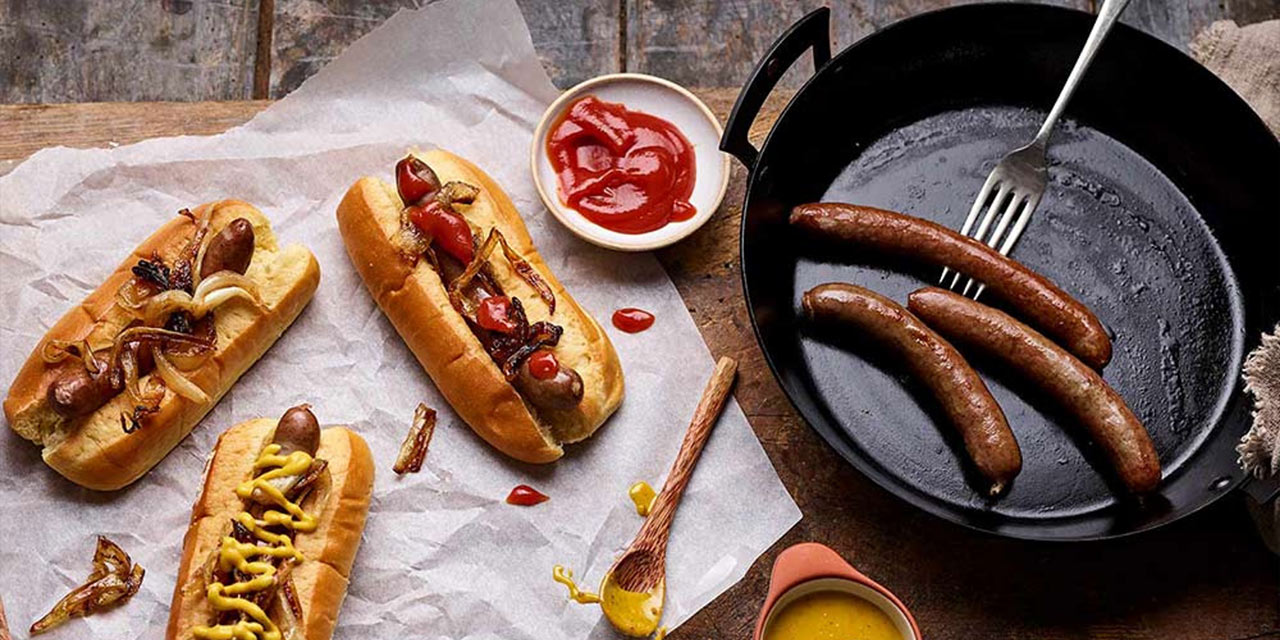
Sometimes the classics are classics for a reason. A soft bun, slow-cooked onions, ketchup and yellow mustard is hard to beat.
For something a little different, try replacing the mustard with horseradish, which works particularly well with the richer flavour of the beef. It also lends itself to a more European style of serving, alongside buttery potatoes or braised cabbage.
And don't feel it has to stay in a bun. It works brilliantly sliced through creamy macaroni cheese, served with smoky baked beans, or simply alongside a generous helping of proper chips.

More ideas worth sharing
Explore our latest thoughts on craft and tradition
Built for retail and hospitality
We work with retailers and hospitality venues who value quality, consistency and British sourcing.
Our products are designed to perform on shelf and on menu, supported by incredible supply and disciplined production.